No results found, please try a different search term.
Explore our latest insights on navigating complex FM service boundaries and ESG strategies through shared goals.
Explore our latest insights on navigating complex FM service boundaries and ESG strategies through shared goals.
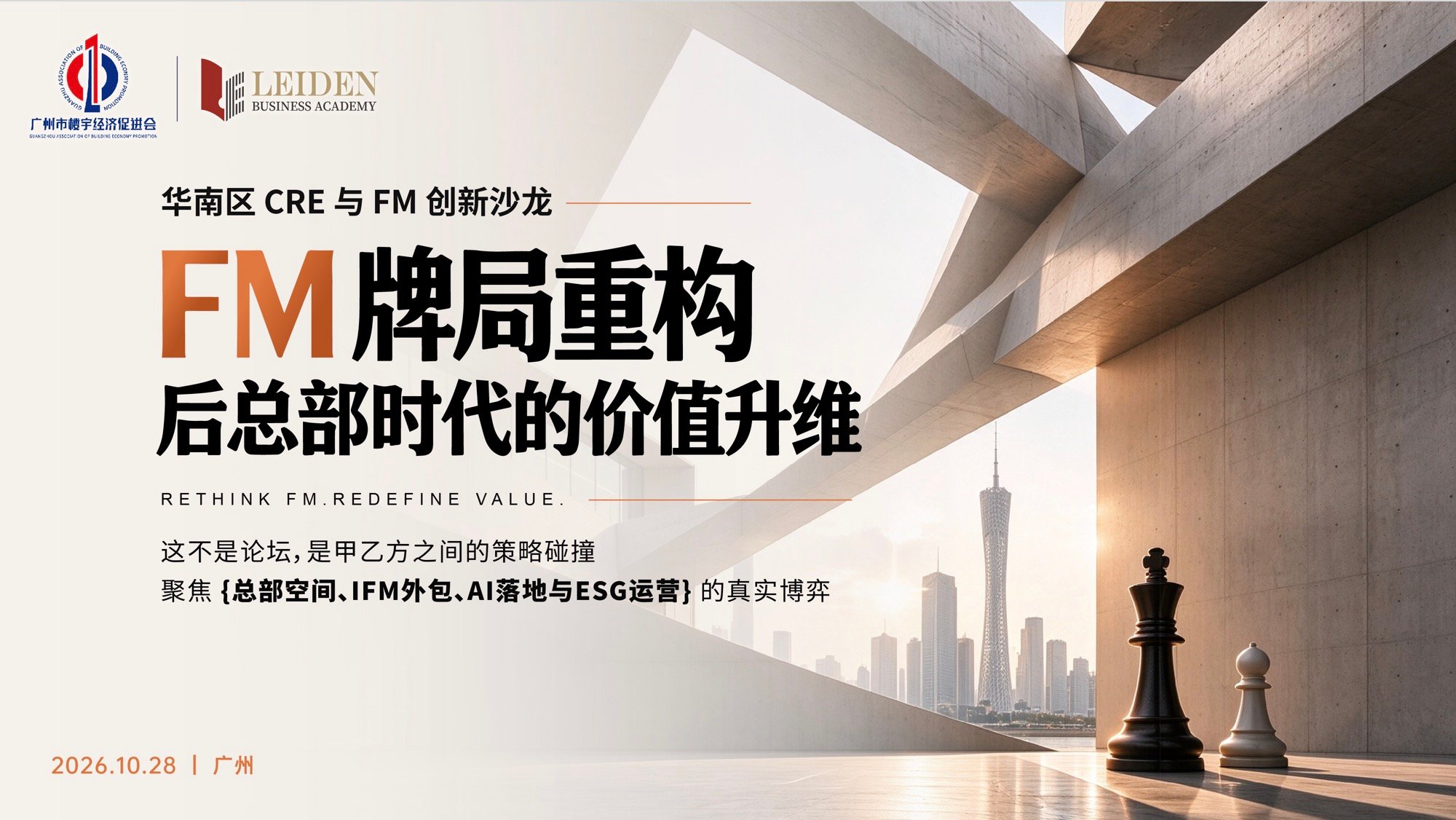
On October 28, at the South China CRE & FM Innovation Salon in Guangzhou, Jonson Wang, ISS China's Chief Commercial Officer, joined FM leaders from enterprises like Kingsoft Office and JOYY Group to share core industry insights.
On "Taking Ownership": Solve the Problem First, Discuss Boundaries Later
"Taking ownership" is essential but requires clarity on what is being owned. In services, the first instinct must be to solve the problem—securing daily operations before arguing over costs or responsibilities.
However, taking ownership has boundaries. Core principles must be agreed upon early: which scenarios require immediate action, and which fall outside the scope and require escalation. This middle ground is gradually clarified through continuous communication during service delivery.

On AI: Embrace the Trend, but Don't Rush the "Immediate ROI"
AI is an inevitable trend, but application scenarios vary by industry, and many investments won't yield immediate returns. Enterprises invest in AI to liberate employees from repetitive tasks, allowing them to focus on services requiring a true "human touch “a robot's smile is just an electronic expression, while a human's smile carries genuine warmth.
ISS's approach is practical: run 3-to-6-month pilots on quality projects, present the data to the client, and only roll out nationally once validated. Both parties must establish a 3-to-5-year roadmap, acknowledging that while technology will replace some roles, it cannot replace the inherent warmth of human service.

On ESG: From "Check-box Compliance" to "Strategic Consensus"
Current market demand for ESG generally fall into three categories:
Certification-Driven: Clients simply need a reason to secure a certificate. The provider's role is to continuously communicate long-term benefits to shift their mindset.
Department-Led: ESG is valued by only a few departments. Here, providers must leverage successful case studies and data from other sites to champion ESG across the entire organization.
Strategic Consensus: The ideal state where ESG integrates into the company's core strategy. These clients demand highly actionable, sustainable, and quantifiable solutions, significantly raising the capability requirements for FM providers.

On Outsourcing Boundaries: Trust is the Foundation; Space is Built on Communication
Knowing when to simply respond and when to proactively step up separates an "OK" service from an "Excellent" one. Service boundaries refine over time: the provider takes the initiative in emergencies, but efforts exceeding baseline expectations must eventually be accounted for in operational costs.
Ultimately, client-provider collaboration is built on trust. Contracts cannot cover every scenario, but a shared collaborative mindset—covering for each other temporarily and formalizing contract changes later—eliminates unnecessary friction. Open communication and transparent rules are essential.

On Regional Differences: Often Outweighed by Industry Differences
Evaluating complex client needs involves two dimensions.
From the industry dimension, differences are often the most significant; the highly complex facility management of a hospital is entirely different from the precision required for a financial data center.
From the regional dimension, differences are also highly impactful. South China faces frequent typhoons, Shanghai's plum rains threaten electrical equipment, and Northern sandstorms drastically reduce solar panel efficiency, requiring specialized cleaning.
Ultimately, while industry impacts are often deeper, regional specificities must be fundamentally integrated into operations.