No results found, please try a different search term.
news center
ISS Delivers Keynote at the 11th Future of Work Innovation Forum
ISS China
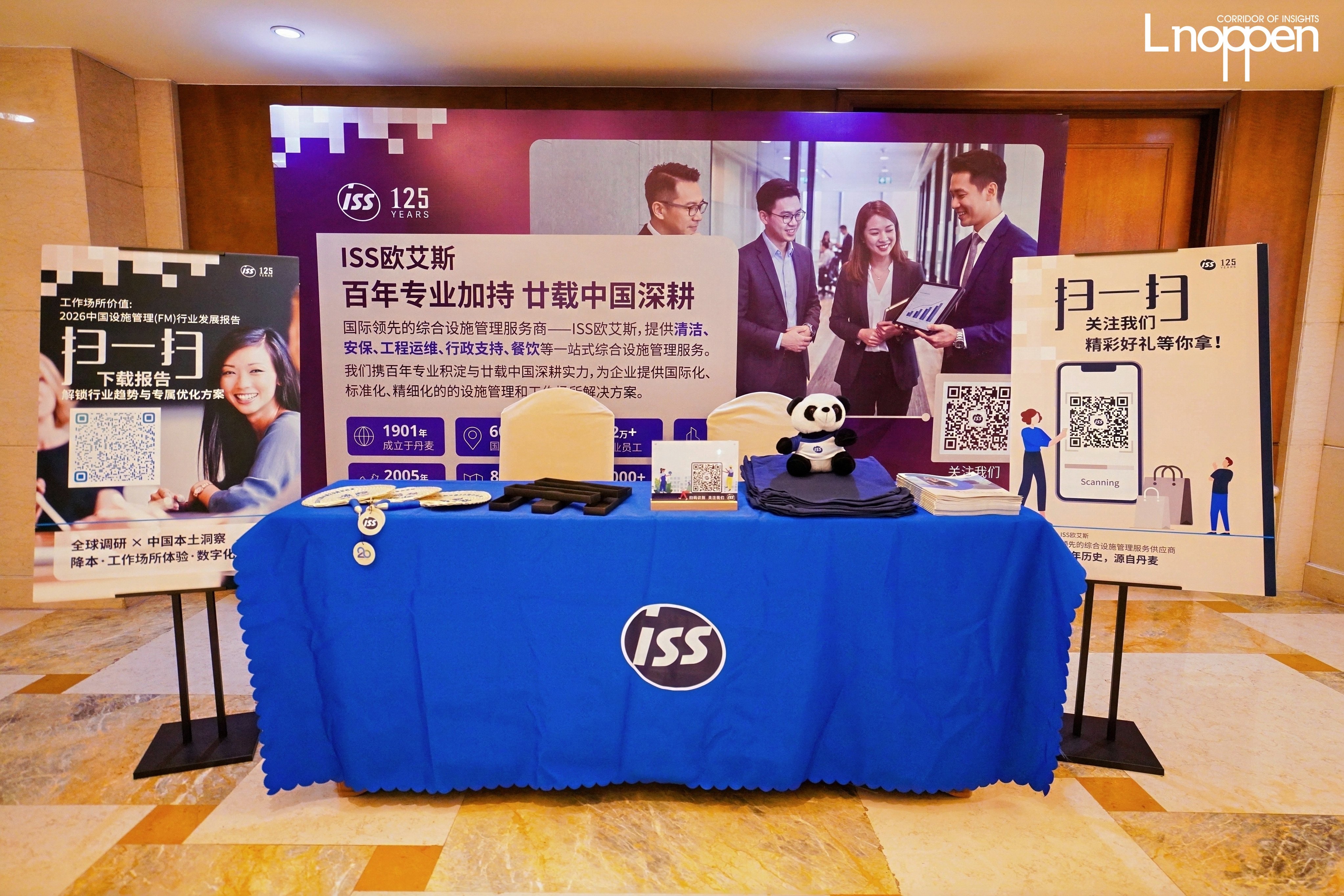
Recently, the "11th Future of Work Innovation Forum," hosted by Noppen, successfully concluded in Shanghai. ISS was invited to attend and drawing upon its newly released 2026 Facilities Management Outlook - China Edition, joined prominent guests from across the workplace ecosystem to discuss pathways for reconstructing workspace value in an era of constrained growth.


Targeting the core industry pain point of the "dual pressures from budget optimization and evolving demands," Landin Shan, Head of Cleaning Service Product and Performance at ISS China, confronted these challenges head-on, sharing practical breakthrough strategies across the following four dimensions:
Budget Under Pressure: Is Compromise Inevitable?
"From 'Is there a budget?' to 'Is the ROI worth it?'"
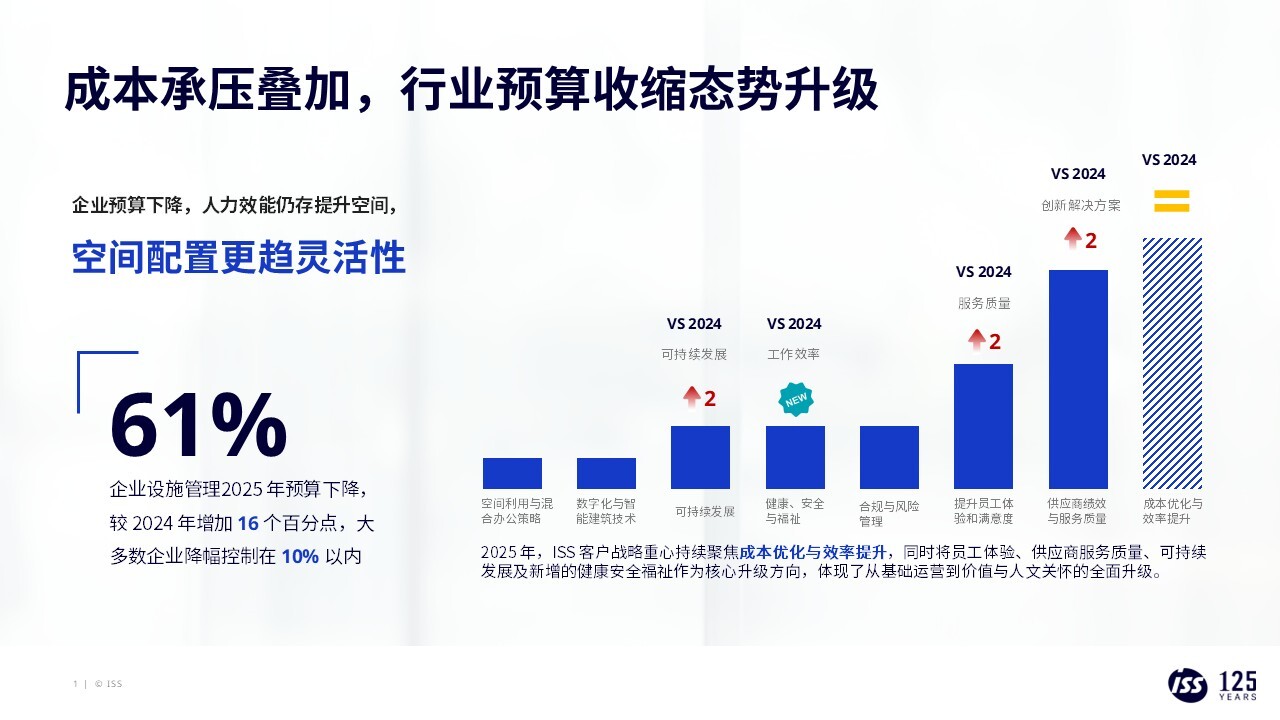
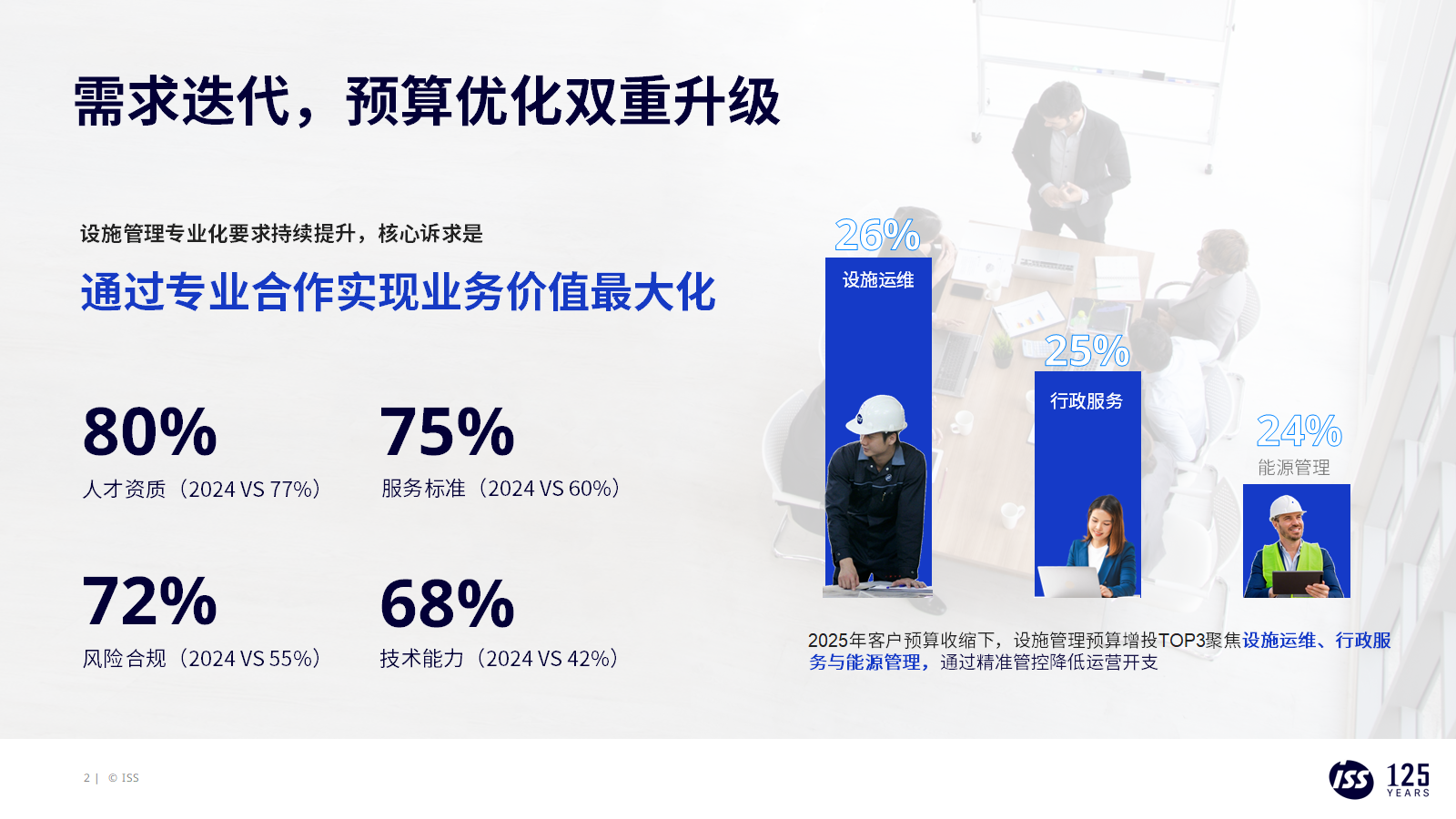
In 2025, 61% of Chinese enterprises faced shrinking IFM budgets, intensifying the contraction from the previous year.
However, macroeconomic pressures do not mean clients are compromising on strategic goals. Enterprises remain highly focused on employee experience, health and safety, sustainability, and long-term supplier performance. Cost pressures must still support continuous operational improvement.
Therefore, the IFM industry's response cannot be mere expense reduction; it must focus on proving the "quantifiable value" of every investment.
Under Budget Constraints: Will Enterprise Demands Decrease?
"The answer is: No, absolutely not."
Instead, expectations for IFM professionalization—spanning talent, service standards, compliance, and technology—have actually risen. This creates a typical "have-it-all" mindset: clients want to control costs while ensuring quality, mitigating risks, and enhancing experiences. Report data confirms this trend, showing increased budget allocations for core areas like facility maintenance, administrative services, and energy management.
Consequently, China's IFM industry has entered a new era of "low growth, high demands, and strict validation," where enterprises remain willing to invest in services that tangibly improve experience and efficiency.
Cognitive Awakening: Is the Workplace Still Just Basic Infrastructure?
"The greatest opportunity for China's IFM industry lies not in adding more services, but in redefining workplace value."
Today's biggest industry contradiction isn't that IFM's value is unseen, but that it remains unproven.
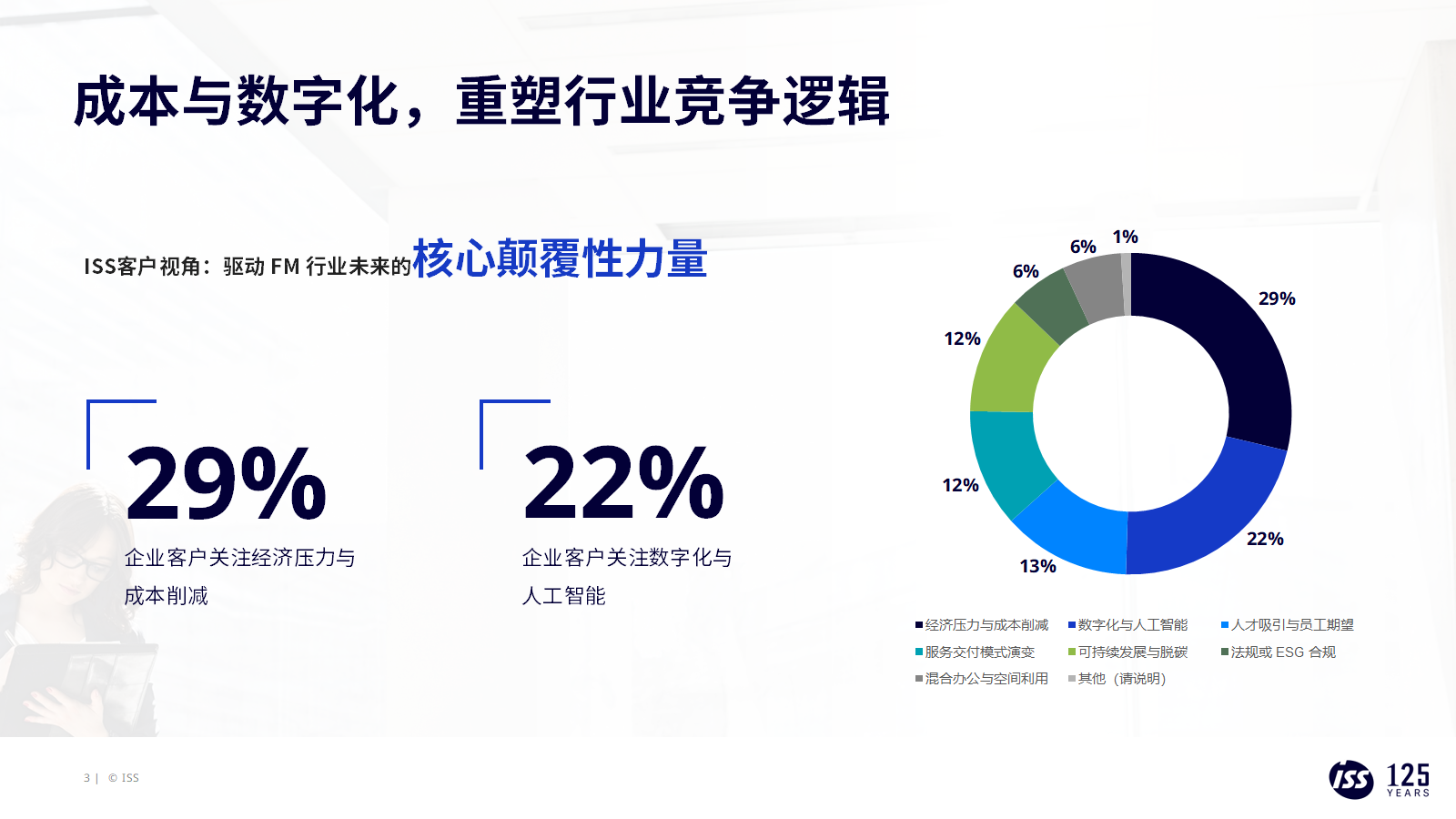
While digitalization drives workplace performance, it's no longer just about launching systems or buying tools. Enterprises now ask: Does it improve efficiency, reduce long-term costs, and enhance the experience?
The workplace has evolved beyond basic infrastructure. The future of IFM digitalization rests not on merely deploying technology, but on delivering quantifiable, verifiable ROI.
The Path to Value Reconstruction: From Cost Executor to Efficiency Enabler
"Future IFM competition isn't about being the cheapest, but connecting cost, experience, efficiency, and sustainable value."
Facing the era's mandate of "wanting it all," ISS is committed to translating every investment into quantifiable efficiency, helping enterprises achieve a comprehensive evolution from "cost execution" to "value reconstruction."
Click to access the full 2026 Facilities Management Outlook - China Edition and unlock workplace efficiency.